
Marin · Sauna Builder Services
Traditional Finnish Saunas
Authentic Finnish sauna builder work across Marin County — wood-fired, electric, and hybrid rooms engineered around real rock mass, ventilation, and soft steam.
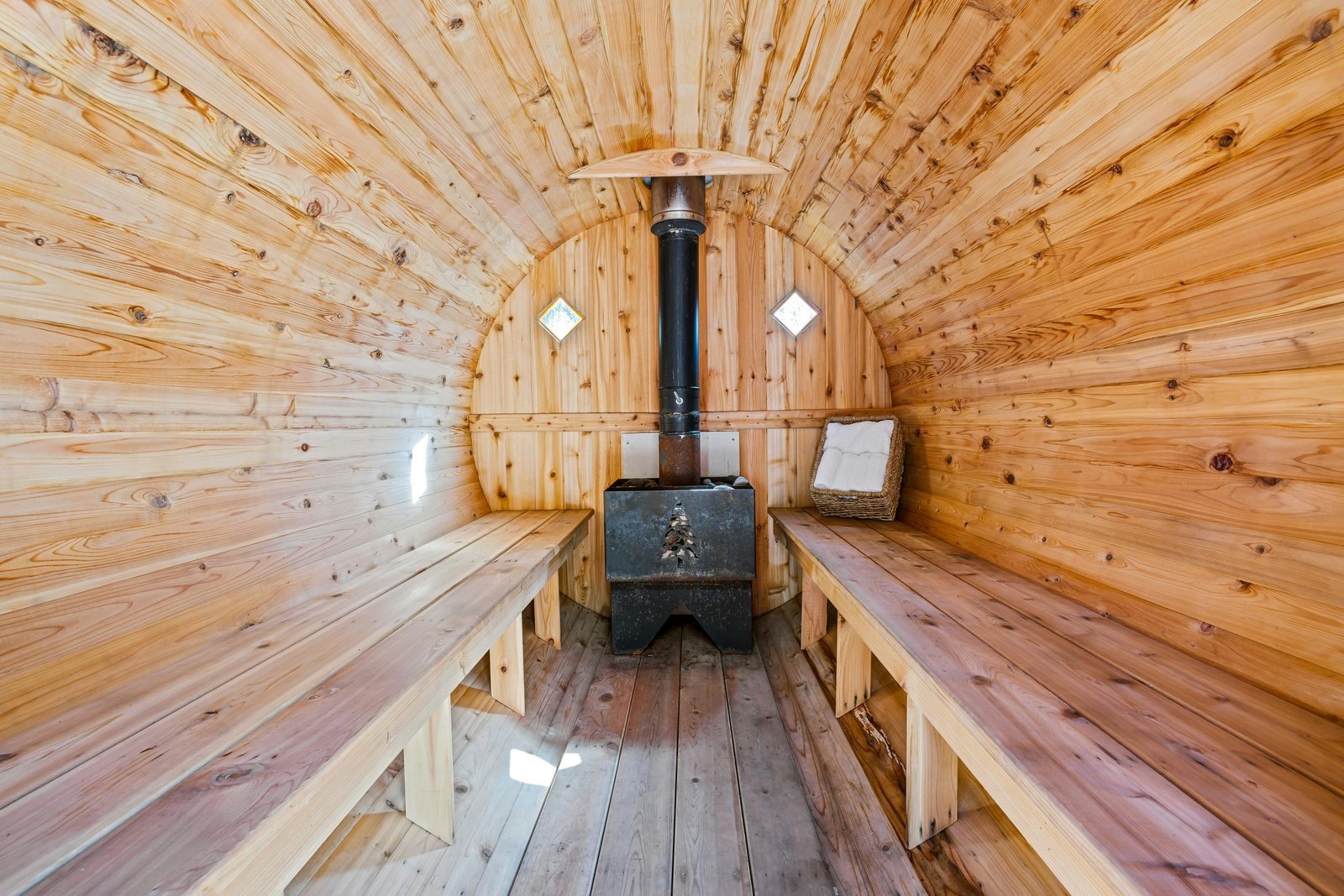
Traditional Finnish Saunas · Marin
Traditional Finnish Saunas Done Right
A traditional sauna is a room that holds heat in stone and lets you decide how wet the air gets. Ladle water onto the rocks and the burst of steam is löyly, and that moment is the entire point of the Finnish tradition. Getting it right is a physics problem more than a decorating one. You need enough stone mass to store energy and release it as a soft wave rather than a scalding blast, a heater sized to the room, and a low intake with a high exhaust so the air genuinely turns over. As a Finnish sauna builder working across Marin County, we build wood-fired rooms for people who want the fire and the ritual, electric rooms for people who want to press a button on a Tuesday morning, and hybrid saunas that do both. A traditional dry sauna runs roughly 160 to 195°F at low humidity until you throw water, which is what makes the heat feel bearable and the steam feel enormous.
How We Work
From first sketch to first löyly, a clear process with no surprises.
1. Volume, stones, and heat source
We calculate cubic volume and specify the heater from that, then choose the stone capacity to match. Wood-fired stoves need a flue path, clearances, and a spark arrestor; electric needs a dedicated circuit. Hybrid units need both, planned together from the start.
2. The shell that makes it work
Insulation, a foil vapor barrier facing into the room, an air gap behind the cladding, and untreated wood on the surface. Then the low intake beside the heater and the high exhaust across the room that give you convection instead of a stagnant hot box.
3. Löyly tuning and handover
We fire the room, measure how it climbs, throw water, and adjust the vents until the steam rolls rather than stings. Then we show you how the room behaves at different vent settings so you can dial it in to your own preference.
When to Choose Traditional Finnish Saunas
A traditional build is the right choice when the ritual matters as much as the heat:
You want real steam, not just warmth
Löyly is the reason to build traditional. If you have used a sauna in Finland, at a Nordic spa, or at a bathhouse and wanted that at home, an infrared cabin will not get you there.
You want the fire
A wood-fired sauna is slower, smells of woodsmoke, and works when the power is out on the hill. For a lot of Marin properties with space at the back, that ritual is the whole appeal.
You want it hot enough to matter
Traditional rooms run 160 to 195°F. If you find infrared underwhelming or you are training heat tolerance deliberately, this is the build that goes there.
You are pairing hot with cold
Contrast therapy works best when the hot side is genuinely hot. A traditional room beside a cold plunge or a cedar tub gives you a full Nordic cycle.
You host
Tiered benches, a large rock mass, and vents engineered for a full room mean the sauna still performs with six people in it, which is exactly when a marginal build falls apart.
You want something that lasts
Built correctly in untreated cedar or Nordic spruce, with a proper vapor barrier and real ventilation, a traditional room is a thirty-year structure rather than an appliance.
Not sure whether traditional, hybrid, or infrared suits how you would actually use it? Call and we will talk it through honestly. Call: 415-578-9210
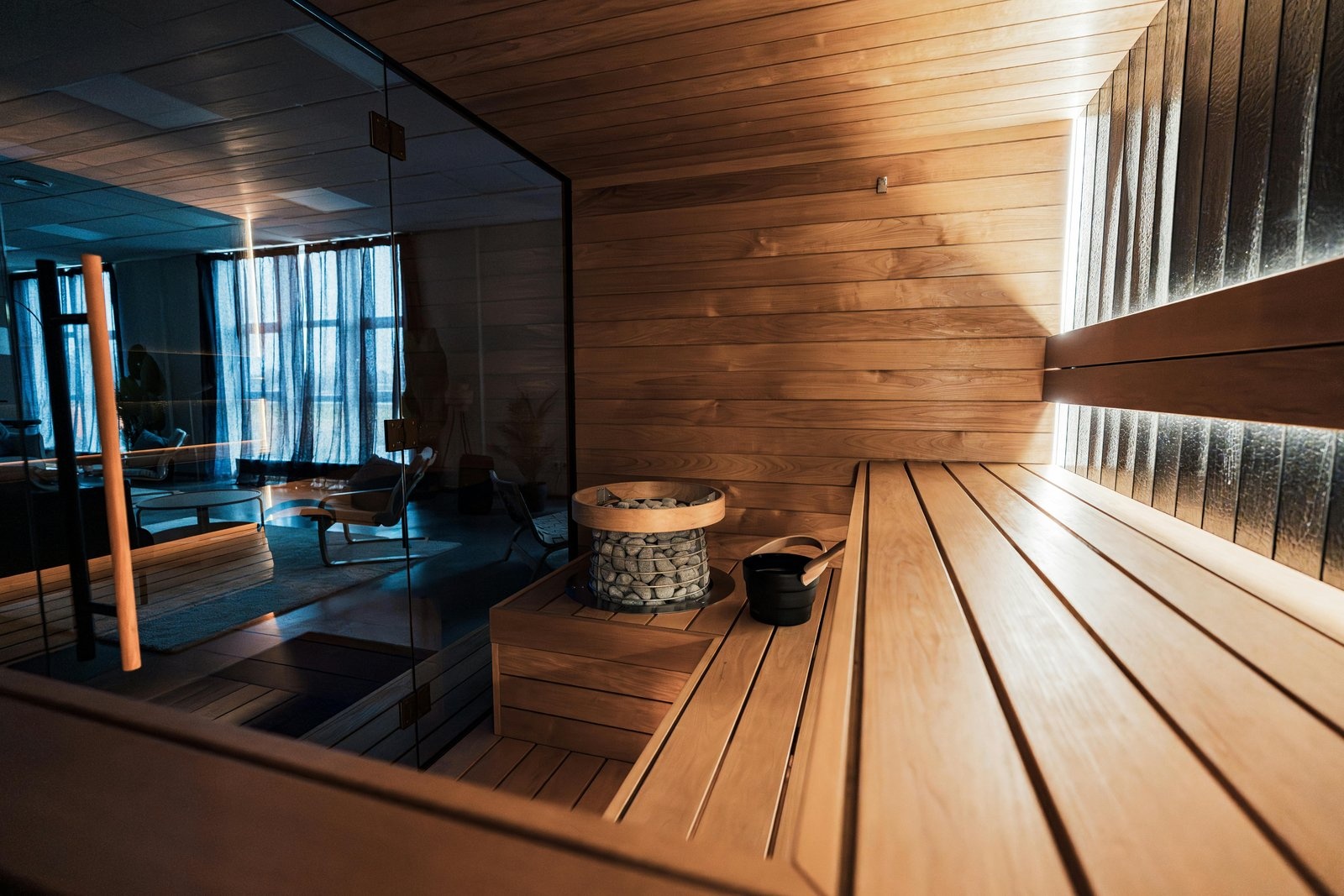
Traditional Sauna Options
The variations we build most often, and who each one suits:
Wood-fired sauna
A stove burning split wood, a flue through the roof, and a heat that arrives slowly and stays. Best for outdoor and rural builds with clearance and somewhere to keep a woodpile dry through a Marin winter.
Electric sauna
A wall or floor heater on a dedicated 240V circuit, ready in thirty to fifty minutes, with a control panel or app scheduling. This is the practical choice for indoor rooms and for anyone using the sauna before work.
Hybrid sauna
Both heat sources in one room. Fire it with wood at the weekend, hit the switch on a weeknight. It costs more up front and it is the setup people are happiest with long term.
Dry sauna operation
Run without water, a traditional room sits at low humidity and high heat, which is what people mean by a dry sauna. The same room becomes a wet sauna the moment you pick up the ladle, which is why traditional is the flexible option.
Rock selection and care
Peridotite or olivine diabase, sized and stacked so air moves between them rather than packed tight. They break down with use and want rotating annually, sooner if you throw a lot of water.
Accessories
A wooden bucket and ladle, a thermometer and hygrometer pair mounted at bench height, a sand timer, headrests, and a vihta hook by the door. Traditional is the one build where the accessories are functional rather than decorative.
What Affects the Cost of Traditional Finnish Saunas
Traditional builds vary mostly on the heat source and the shell. What moves the number:
- Wood-fired versus electric. A stove is comparable in equipment cost but adds a flue, clearances, hearth protection, and often a chimney penetration. Electric adds a dedicated circuit and possibly a panel upgrade.
- Stone mass and heater class. Heaters built for heavy stone loads cost more and are the reason the steam feels soft. This is not the line item to economize on.
- Interior wood. Nordic spruce and hemlock at the accessible end, clear western red cedar and thermo-aspen benching at the premium end.
- Room size and ceiling height. Volume drives heater kW, and ceiling height drives bench height, so a tall room costs more than its floor area suggests.
- Ventilation routing. A straightforward through-wall pair is simple; ducting an exhaust through a finished ceiling or an exterior wall on a hillside build is not.
- Permits. Electrical for the heater, and mechanical review where a wood-fired flue is involved. We file and schedule both.
We quote flat rate after seeing the space, and we will tell you where a cheaper option is genuinely fine and where it is not. Estimates are free.
Frequently Asked Questions
What temperature does a traditional Finnish sauna run at?
Between roughly 160 and 195°F at the upper bench, at low humidity until you throw water. Most people settle around 175°F. The heat feels tolerable at that temperature precisely because the air is dry, and each ladle of water on the stones changes it completely for a minute or two.
Wood-fired or electric — which should I build?
Electric if you want to use it on a weekday morning, because it is ready in under an hour and needs no tending. Wood-fired if the fire is part of what you want and you have the clearance, the flue path, and somewhere dry to keep wood. If you can afford it, a hybrid removes the choice entirely.
How much stone does a sauna heater actually need?
More than most kit heaters ship with. Stone mass is what stores energy and releases it as soft steam rather than a sharp blast, so we specify heaters rated for a heavy stone load and fill them properly. It is the single biggest difference between a room that feels Finnish and one that feels like an oven.
Can a traditional sauna go indoors?
Yes, and most of ours do. An indoor traditional room needs a correct vapor barrier, real ventilation, and a dedicated circuit, all of which we handle. Wood-fired indoors is possible but needs a flue path and clearances that many houses cannot give you, so indoor builds are usually electric.
How is this different from a steam room?
A traditional sauna is hot and mostly dry, with humidity you create in bursts. A steam room runs far cooler, around 110 to 120°F, at total saturation, and it needs a tiled and waterproofed enclosure rather than a wooden one. Different rooms, different construction, and we build both.
Let's build your sauna.
Tell us about your space and how you like to use heat and cold. We will sketch a plan, talk through materials and layout, and walk you through every step. Estimates are free.
Or call us now: 415-578-9210