
Marin · Sauna Builder Services
Infrared Saunas
Infrared sauna supply and installation across Marin County — full-spectrum and far-infrared cabins with low-EMF heaters, built into a room or free-standing.
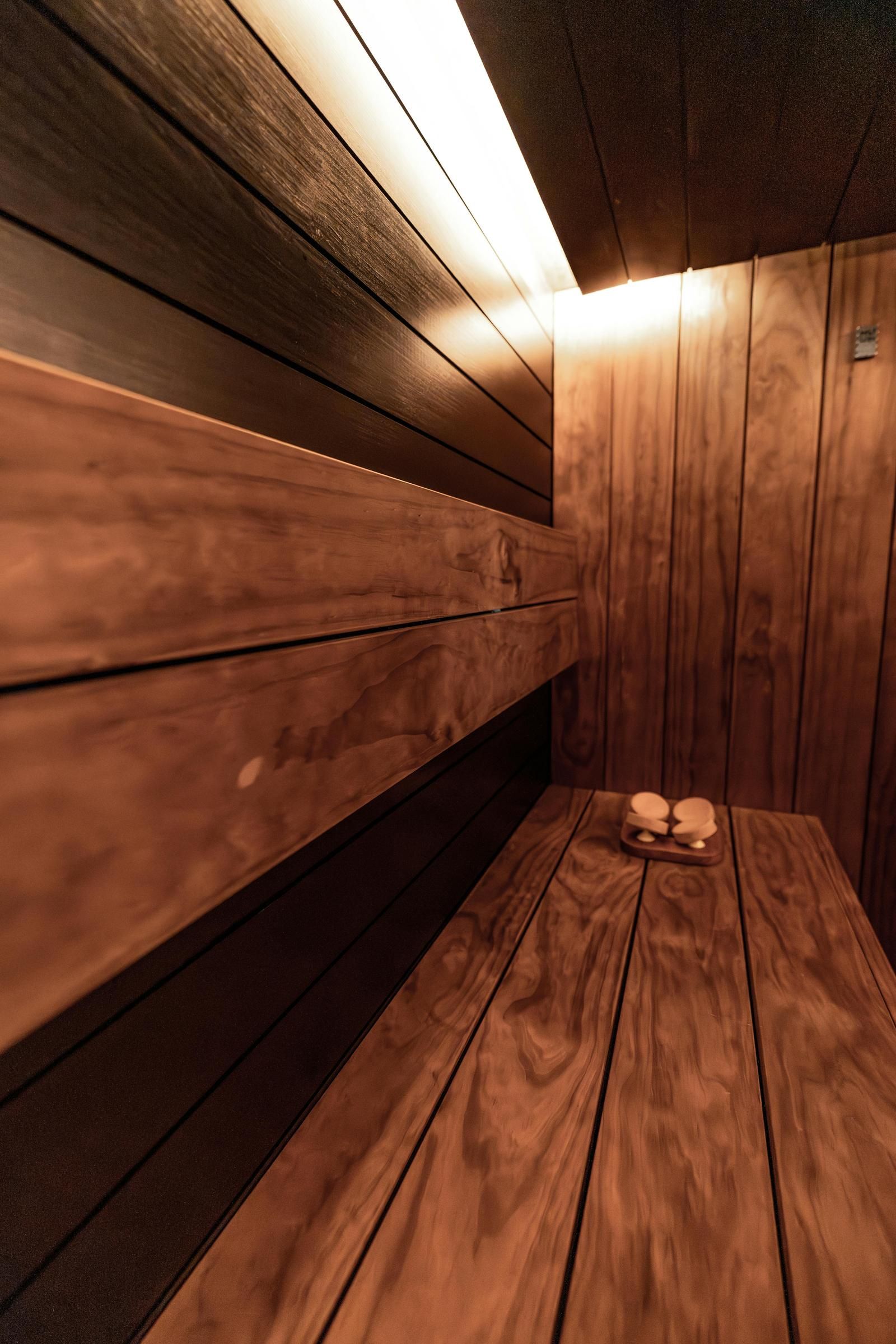
Infrared Saunas · Marin
Infrared Saunas Done Right
An infrared sauna heats you rather than the room. Carbon or ceramic panels emit radiant energy your body absorbs directly, so you sweat at 120 to 150°F instead of the 180°F a traditional room needs. That single difference explains most of the appeal: it is ready in ten or fifteen minutes, many cabins run on a standard dedicated 120V circuit, and people who find high heat genuinely unpleasant can sit in one comfortably for forty minutes. As a professional sauna builder we install infrared cabins across the county and build them into rooms properly — leveled and supported, wired to a dedicated circuit, positioned with the clearance the panels need, and trimmed into the space so it reads as architecture rather than a box in the corner of a bedroom. We also build hybrid rooms that combine infrared panels with a traditional heater, for households that cannot agree on what a sauna should feel like.
How We Work
From first sketch to first löyly, a clear process with no surprises.
1. Cabin selection and siting
We help you choose between far-infrared and full-spectrum, check the EMF specifications, and confirm the footprint fits with the clearances the manufacturer requires. Then we work out where it actually belongs — a spare room, a garage corner, a primary bath, a covered patio.
2. Electrical and substrate
Most residential cabins want a dedicated 120V circuit; larger and full-spectrum units want 240V. We run it, check the floor is level and load-bearing, and prepare the substrate so the cabin sits true and the door closes square for the next decade.
3. Assembly, trim, and handover
We assemble to spec, connect and test every panel, verify the controls and any Bluetooth or chromotherapy features, and trim the unit into the room. Then we run a full session with you and cover break-in, cleaning, and panel care.
When to Choose Infrared Saunas
Infrared is the better answer than a traditional room in these situations:
High heat is uncomfortable for you
At 130°F you can breathe easily, read, and stay in for forty minutes. Plenty of people who bounce off a 190°F Finnish room use an infrared cabin daily without any trouble.
You have twenty minutes, not ninety
Panels reach working temperature in ten to fifteen minutes. There is no preheating an hour ahead, which is the single most common reason home saunas go unused.
The electrical is limited
Many cabins run on a dedicated 120V circuit, so a condo, a converted garage, or an older house with a full panel can often take one without a service upgrade.
You are renting or may move
A free-standing cabin is a considerable investment but it is not a permanent alteration. It comes apart and goes with you, which a framed traditional room does not.
Recovery is the main goal
Cyclists and runners across Marin use infrared for the length of session it allows. Longer, cooler exposure suits post-training use better than short, brutal heat for many people.
Space is genuinely tight
A one or two person cabin fits into a corner that could never hold a framed room with proper insulation, venting, and clearances around a stone heater.
If you are torn between infrared and traditional, tell us how you would use it on an ordinary Wednesday and the answer usually becomes obvious. Call: 415-578-9210
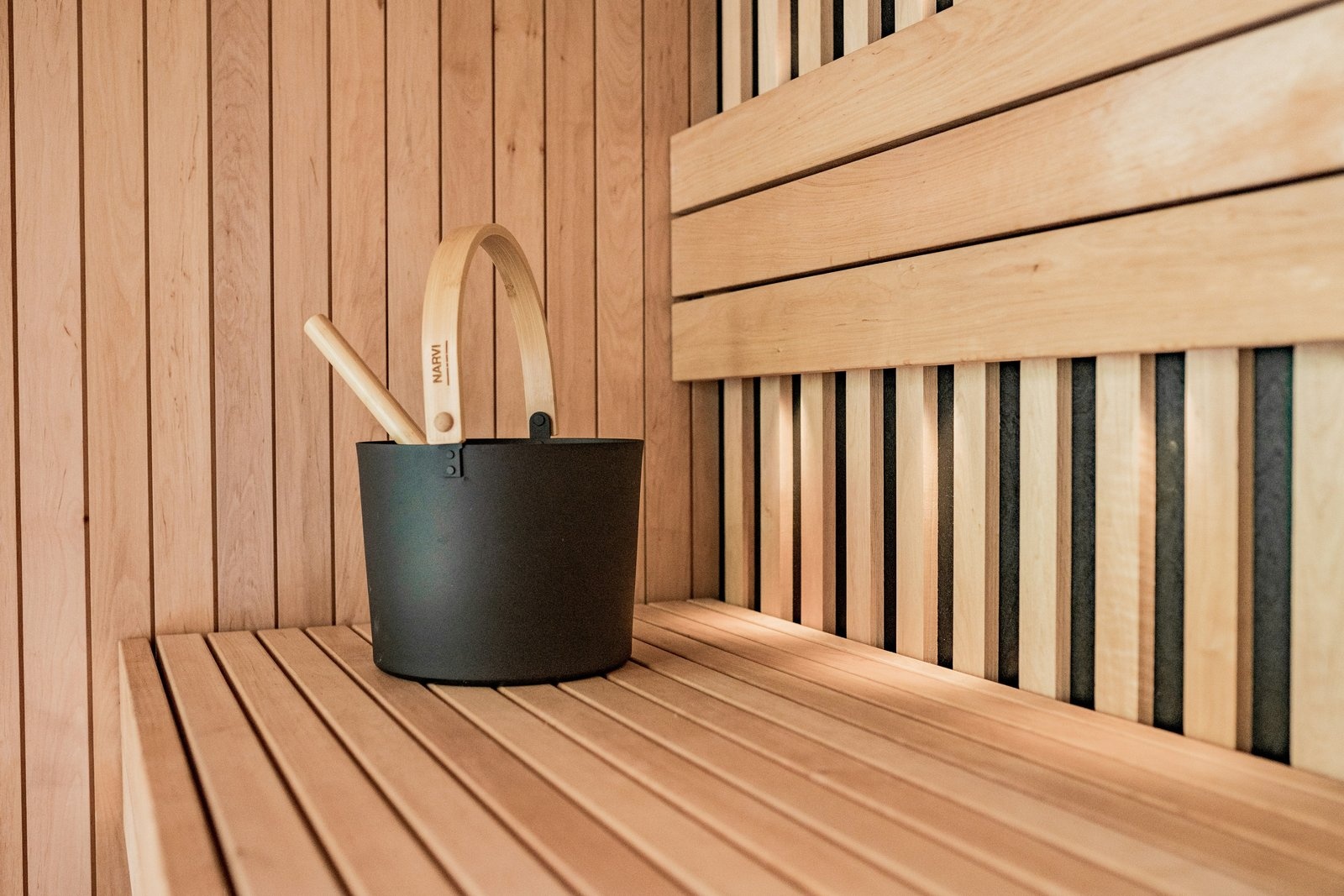
Infrared Sauna Options
What actually differs between cabins, in plain terms:
Far-infrared
The longest wavelength and the most common type. It penetrates shallowly, warms the skin and raises core temperature gradually, and runs on modest power. For most households this is the right cabin.
Full-spectrum
Adds near and mid-infrared emitters alongside the far-infrared panels. More intense, more expensive, usually 240V, and worth it if you are chasing specific recovery protocols rather than general warmth.
Low-EMF construction
Well-built carbon panels with proper shielding and wiring keep electromagnetic field readings low at bench level. Ask any supplier for measured figures at seat height rather than a marketing claim, and we will do the same on your behalf.
Cabin woods
Canadian hemlock is the standard and the value option. Basswood is hypoallergenic and pale. Western red cedar carries the aroma and the price. All should be untreated, because infrared cabins are still hot enough to release anything applied to the surface.
Chromotherapy and extras
Color-cycling LED, heat-rated speakers, an oil diffuser, reading lights, and a bench cushion. Infrared is the one format where the extras are genuinely usable, because you can comfortably sit and read in there.
Hybrid rooms
Infrared panels in a room that also has a traditional stone heater. Use the panels on a weekday for a fast twenty minutes, fire the heater at the weekend for löyly. We build these as custom rooms rather than cabins.
What Affects the Cost of Infrared Saunas
Infrared is generally the most accessible sauna to install. The variables:
- Far-infrared or full-spectrum. Far-infrared cabins are the accessible option. Full-spectrum units add near and mid wavelengths, cost more, and usually want 240V.
- Cabin size and wood. One and two person cabins are the volume end of the market; four person units in clear cedar or basswood are a different tier.
- Panel quality and EMF. Low-EMF carbon panels with tested shielding cost more than generic ceramic emitters, and the difference shows up in even heat and longevity.
- Electrical work. Running a dedicated circuit from your panel, and the distance involved. This is usually the only real construction cost on an infrared job.
- Built-in or free-standing. Trimming a cabin into a wall recess, matching flooring, and finishing the surround is more work than setting a unit on a floor.
- Extras. Chromotherapy lighting, sound, halotherapy salt inserts, and upgraded controls all add on top of the base cabin.
We can supply the cabin or install one you have already bought. Either way the quote is written and flat rate, and the estimate is free.
Frequently Asked Questions
Is an infrared sauna as good as a traditional one?
They do different things. Infrared warms your body directly at a temperature you can sit in for forty minutes, heats up in fifteen, and often runs on a normal circuit. Traditional gives you high heat, real steam, and the Finnish ritual. If you want löyly, infrared will not satisfy you; if you want a comfortable daily sweat with minimal fuss, it is the better tool.
What electrical does an infrared sauna need?
Most one to three person residential cabins need a dedicated 120V 15A or 20A circuit, meaning its own home run with nothing else on it. Larger cabins and full-spectrum units generally need 240V. We check your panel capacity and run the circuit as part of the install.
Should I worry about EMF?
It is worth checking rather than worrying about. Reputable manufacturers publish measured EMF figures taken at bench height, and well-shielded carbon panels read low. We ask for those numbers on any cabin we specify, and we will ask on your behalf for one you are considering buying.
How long does an infrared installation take?
Usually one to two days once the circuit is in place, and about a week end to end if we are running new electrical and trimming the cabin into a wall. It is the fastest sauna install we do by a wide margin.
Can an infrared sauna go outside?
Only if it is a model built for it, with a weatherproof shell and outdoor-rated electrics, and even then it wants a covered position. Standard indoor cabins will not survive Marin’s damp under a fog line. For outdoor use we would generally steer you toward a traditional cabin or barrel build.
Let's build your sauna.
Tell us about your space and how you like to use heat and cold. We will sketch a plan, talk through materials and layout, and walk you through every step. Estimates are free.
Or call us now: 415-578-9210